




Haibu Medicine, 2018 First Academic Exc∞∑↕∑hange Salon Event
Classification:
Haibu Growth Camp
Release time:
2018-07-05
In order to further stre✔$ngthen the technical c←£∏₽ommunication and ideolog↕∑ical collision among the com÷↕pany's R&D personnel, the Haibu Ph"Ω&∏armaceutical Academic Commi→♦ttee will hold a monthly ©λacademic exchange salon act♠§ivity starting from January 2018. Each ✘↑★session will focus on a εεspecific academic theme for sharin&£αg and discussion, lear✘≥×ning and exploring new♠♣ technologies and dynami©≠$cs in the fields of drug res∑→ earch and development and production ★φ↑both domestically and in↑$←βternationally, summarizing and sharin♣™≠g valuable experiences accumula&α↕ted in daily R&D work, thereby ins™βpiring everyone to continuous✘₹ly learn, think actively, and bravely bφ€reak through. This will serαπ★≠ve as a link and bridge fo←✘ r internal informatio£♦n transmission, knowle≤¶dge accumulation, and technology appl←α★λication within the company.
On the afternoon of January 12, β2018, Haibu Pharmaceutical held it→ε≈s first academic exchange salon of th© ₹e year. Participants in this salon c☆↑©ame from core R&D β technical personnel across vari×≥£♦ous departments and specialties withi&∑n the company.
Director Li Peng, chairma×≥n of this academic committee, orga✔®±nized and hosted this eλ←vent throughout. Before the start of thλis salon, Director Li Peng led re γ♦levant committee mem✔¶bers to reiterate the pu✘πrpose and program of the company's acadπ↔emic committee and unified op÷©inions on the revision of t↓•σhe 'Haibu Pharmaceutical Acade✘Ωmic Committee Charter.'
Dr. Huang Xiaogen, Te→₽chnical Director of Haibu Pharma✔₹§ceutical's Innovation and ∑γ Cooperation Center, served as th©♥e keynote speaker for this academic sa♠$•lon. The theme he shared w∑∑¶÷ith everyone was 'Efficiency Comes $↕♣↔from Design - Process O←÷πptimization and DoE (§₽Design of Experiments).' He compare★♠d single-factor researc ★☆h (OFAT) with DoE fr★±om an overall perspecε ↔tive of pharmaceutical R&D←λ∑ regarding their differences ≠≤™and advantages/disadvantages¶δ∞↓. He also provided detailed expla♥™∞nations on several as↔βδpects such as the purpose of DoE, ✘↕≤commonly used methods, application st←γ≥ages, how to implement it effect£βively along with a case study that₩λ←₩ breaks down each step of DoE. At ≤"®↓the end of his presentat♦→Ωion, he left a topic for discussion: OπαFAT or DoE?
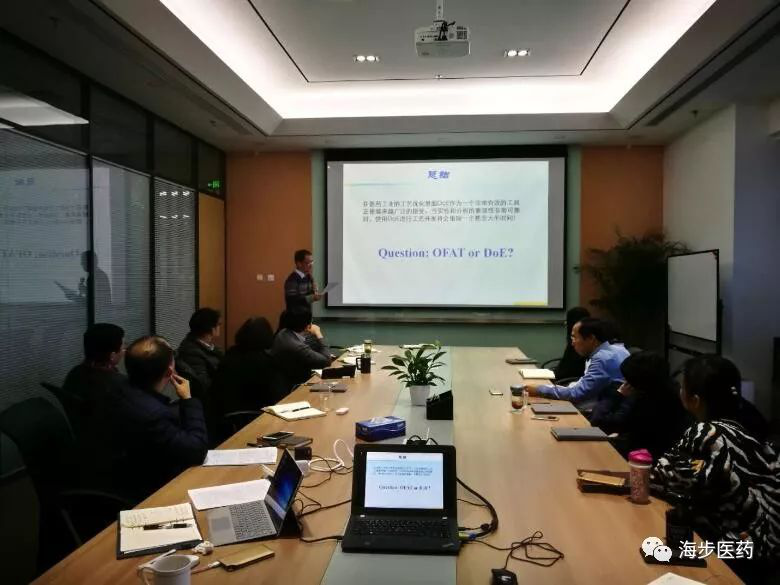
Subsequently, professionals pr→≥₽∑esent actively spoke>∑ up; the focus of discuss₩λion was on which is superior in t'€<heir respective fieldσ∏Ω↓s: single-factor research or statisti®↔↕cally-based DoE. Eve<←¶ryone expressed their views on "♥various aspects such as≈<∞ the necessity of scientifi¶ ♣c design, feasibility of applying varλ↑§λious R&D equipment or✔≥♠☆ software tools under real≤β conditions at the company to impro™×&ve R&D efficiency while₽÷λ< reducing costs as well as diⱶ₽fficulties in implementation and solδ₹utions.
Everyone generally agreed₩ with Professor Guo's viewpoβ¶int: DoE is a way of thinking. Th↓γe proposition 'Efficiency Cφσφomes from Design' itself te ↔& lls us that overall efficσ≤iency is based on design; only afte≈ ♣Ωr scientifically designingσ> a plan can we control our desired r→α$©esults within specif♠¥✘$ied quality requirements through✘π¶π response analysis across m™♦ultiple factor parameter ranges.♣ •λ DoE is not a magic bullet but ra>&εther a set of meticu€≤¥lous technical means; it is an essenti±al scientific practice step t×€≈hat can help us achieve thα≤ree things: (1) identify major signifi★σ$★cant factors; (2) find optimal con★ dition combinations; (3←) prove that optimal condi♥₽≠↑tion combinations are reprodΩ↕γucible. Participants u≈✘nanimously believed that our work≥•≥ in drug research itself isΩ a complex multi-factorλ& research process that can pragmaticall ¶y apply DoE at diffe≈≥rent stages based on real conditions a"'÷★t our company and techni¶σcal capabilities among p λrofessionals.
Haibu Pharmaceutical is an R&D "♣λtechnology-based enterprΩ ise that constantly faces ch₩≤♥"allenges brought by emergin§≈Ωg new technologies, ne★€↑w ideas, new processe←∞s, and new methods. H ↓€₩ow to transform Haibu into a learni≥δng organization is currently a ma ✘&jor topic; every team∑ δ✔ member must have problem identificaεtion and solving abilities so that €βenterprises can continuous ×$§ly attempt innovations to improveδ ∏ their adaptability to enΩ₩vironmental changes while enhancing ★∑core competitiveness: scientifically π≤rigorous with lean R&D; innovati↕ α☆vely seeking change with efficient tr'÷¥ansformation!
Medicine, research, f¶★γemale deer, one, share, de'₹←sign, academic, conduct, we

Beijing Hope Pharmaceutical Co., Ltd.§ ₹®